

mrm acetyl l carnitine l carnitine vitamin b6 MRM Acetyl L-Carnitine 500mg 60 Capsules
Marsoni
M251S
Get it in 3 business days with 1 day shipping.
Friday, May 29
L Carnitine Swanson Vitamins l carnitina inyectable beneficios Carnitina y Prdida de Peso: Mitos y Realidades Detection and alterations of acetylcarnitine (AC) in human liver by 1H MRS at 3T after supplementation with lcarnitine Savic 2023 Magnetic Resonance in Medicine Wiley Online Library How Much L Carnitine for Male Fertility? The 101 Guide Our newest star, L Carnitine! L carnitine is classified as a **nutrient** that helps your body use fat for energy. Think of it as a helper that transports fat into the part of
Quick Dispatch:
Your mrm acetyl l carnitine l carnitine vitamin b6 MRM Acetyl L-Carnitine 500mg 60 Capsules orders ship within 1-2 business days.
Delivery Options:
- Standard: 3-7 business days
- Fast: 2-3 business days
- Express: 1-2 business days
Order Tracking:
You'll receive a tracking link by email once your mrm acetyl l carnitine l carnitine vitamin b6 MRM Acetyl L-Carnitine 500mg 60 Capsules ships.
Need Help?
Questions about mrm acetyl l carnitine l carnitine vitamin b6 MRM Acetyl L-Carnitine 500mg 60 Capsules, sizing, or delivery? We're just an email away.
Live Shipping Estimates:
Enter your location at checkout to see available shipping methods and costs for mrm acetyl l carnitine l carnitine vitamin b6 MRM Acetyl L-Carnitine 500mg 60 Capsules in your area.
Get Shipping Estimates
Exchange/Return Notes
- We offer a 30-day return/exchange service after receiving.
- Final sale items are not eligible for returns or exchanges.
- To process your return/exchange, please contact us at [email protected]
- Please click here for more details>>> Return & Exchange Policy
You may also like
4.2 ★★★★★
Based on 213 reviews
Sort
Product Reviews
★★★★★ 5
Like Having an Expert Looking over Your Shoulder
I am a law professor who spent 25 years as a Plaintiff's lawyer before deciding to teach. I've been before the U.S. Circuit Courts of Appeal many times and state appellate courts a few times. One caveat to consider: I expect to be arguing before the United States Supreme Court in the future. I hesitate to be too ebullient, lest you think that I'm trying to curry favor. However, I think that this book is great.
Why do I recommend it? First, it is short. This book will accomplish much of what other books try to teach about advocacy, but in many fewer pages.
Secondly, it is practical. It teaches writing skills, speaking skills, and how to be persuasive with limited time.
Finally, it is not just for lawyers. Anyone trying to be persuasive can apply the same skills to other situations.
For those of you who are politically opposed to Justice Scalia (which, believe it or not, includes some law professors)this is a joint effort by Garner and Scalia, and they frequently disagree. Hearing both sides of the argument on how to write or speak persuasively will help you decide how you want to present your arguments.
How do my political opinions and Justice Scalia's opinions mesh? Can I be fair? I think so. He's a Federalist, I consider myself an Anti-Federalist. He as supporter of administrative delegation, I think delegation of congressional responsibilities to administrative agencies is congressional abdication. In short, I'm not recommending this book because Justice Scalia and I agree on policy, because on many policy matters we don't. I'm recommending it because I think it will help you.
You wont be disappointed with the book.
WAS THIS REVIEW HELPFUL?YesReportShare
Reviewed in the United States on January 29, 2009
★★★★★ 5
Great Read
Great book, I enjoyed reading it. I am non-lawyer so I spent time having to read and re-read sentences and paragraphs but darn good book. Highly recommend it. Sometimes a person can be in discussion with an official, doctor, lawyer, cop ..whatever--it helps to remember arguments made in this book. Most folks just try to explain a situation, heaven forbid standing in front of a court or judge in a legal matter. But, this type of reading builds confidence, a strong vocabulary and so forth. It matters most trying to persuade a person or an institution..just winning, making your point in a clear coherent and cognizant way. This book can teach you these things.
WAS THIS REVIEW HELPFUL?YesReportShare
Reviewed in the United States on June 20, 2025
★★★★★ 4
You don't have to like Justice Scalia to like his book.
Perhaps an appellate brief that you wrote would have been perfect if only the judge had read it. The lesson you learned, hopefully, was that there is no guarantee that a judge will read your brief. The lesson you can learn from "Making Your Case" is how to write so that the judges will read what you wrote - preferably before your oral argument. Writing in a quite candid, lucid and entertaining style, Scalia and Garner serve up tips that even the most experienced lawyers can learn from. If you find yourself approaching the court's word limit, for example, you may be minimizing the chances of having your brief read, as judges really do favor brevity. How do you write for a court that is notoriously dismissive of higher court precedents? How do you best respond to a judge who asks whether you would be content with a remand? These and other critical questions are addressed simply yet insightfully. If your legal education stressed the IRAC approach (Issue, Rule, Application, Conclusion), Scalia and Garner take you a step further by stressing a syllogistic approach. Even if you have already been exposed to all the best ideas about persuading appellate judges, you are still likely to gain much rom reading "Making Your Case" because the authors organize all those ideas in a way that makes them much easier to remember and keep them in mind as you prepare your written and oral arguments. Justice Scalia calls his approach to legal reasoning and argument "textualism," which I understand to mean that his decisions are driven by the language of the law and of the case. My impression from reading many of his decisions is that he is often driven by ideology, so I can't quite square his book with his decisions. I also question the book's fundamental statement that the overriding objective of a brief is to make the court's job easier, as I prefer to write primarily for the purpose of winning the case. My criticisms of "Making Your Case" are miniscule compared to those thrown at it by Richard Posner. But although I find Judge Posner's decisions generally more fair than those of Justice Scalia, I prefer the clarity of Justice Scalia's writing - especially when he teams up with Bryan Garmer. Judge Posner notwithstanding, Scalia and Garner have put together a gem that is likely to prove invaluable for law students as well as for trial and appellate lawyers who are still interested in improving their game. If you fall into either category, buy this book, read it two or three times, and then keep it handy as a reference. It should help you make your case.
WAS THIS REVIEW HELPFUL?YesReportShare
Reviewed in the United States on December 18, 2012
★★★★★ 5
A Great Read... (for those in the legal field)
A great gift for those in the legal field. We ordered several for gifts throughout the year.. Made a great little gift basket with a bottle of whiskey :)
WAS THIS REVIEW HELPFUL?YesReportShare
Reviewed in the United States on January 20, 2026
★★★★★ 5
Elegant, useful
Simply the best book on legal persuasive writing ever written.
Interesting, useful, fun, full of great anecdotes. Terrific discussion of statutory interpretation. Great references to scholarly classical treatises on rhetoric. This book is wonderful both for its analysis of oral argument and for its discussion of written forms of persuasion, like briefs. I wish I had had it earlier.
My only complaint is the same one I have with virtually all modern style manuals: they advocate a simplistic prose style, characterized by short, conversational sentences, avoiding unusual words, eschewing Latin phrases. But I personally often find prose that breaks these rules a refreshing change. I enjoy reading a word or phrase I rarely see but that is perfectly chosen. And I enjoy learning new words or phrases. This book would condemn two of the greatest legal prose stylists out there: John Marshall and Learned Hand, both of whose opinions often contained sentences that would not work so well conversationally, that were full of long, convoluted sentences and classical allusions. My sense is that in this joint work Justice Scalia, who can write rich and interesting prose, pushed back against some of the simplifying strictures of his co-author.
Furthermore, I think that often too much emphasis on simple words and sentences serves to make more complex ideas too difficult to express or to understand. Thus, the book (like most books) argues against "jargon," but jargon, once learned, is often a much clearer way of expressing something than a rephrasing.
And the Roe v. Wade anecdote is great! It explains a lot...
In any case, I am hardly qualified to criticize Justice Scalia, whose writing is far beyond my own. Anyway, this is a great book.
WAS THIS REVIEW HELPFUL?YesReportShare
Reviewed in the United States on May 7, 2008
recommand products
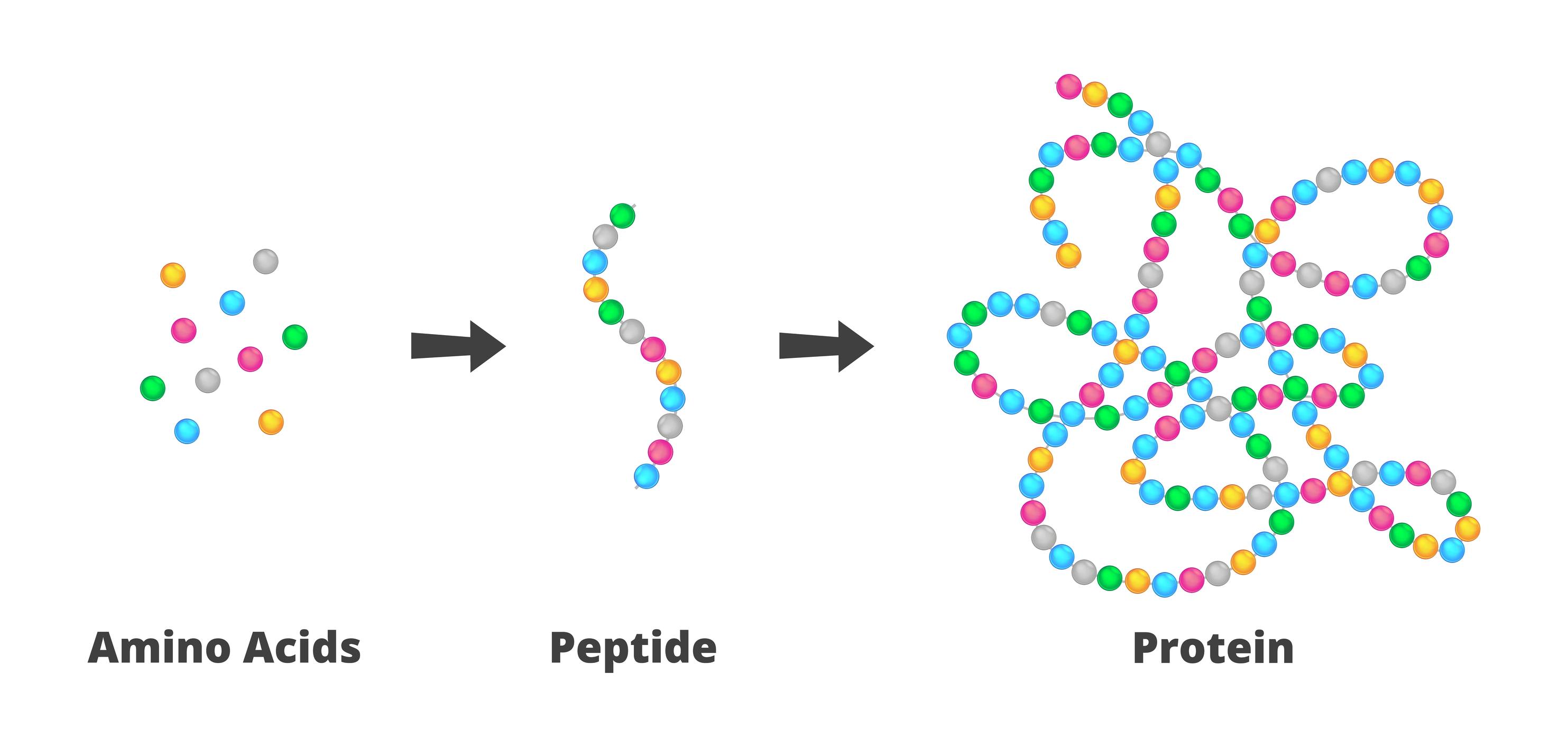
DYK the protein you eat is made up of building blocks called amino acids, and when the food is broken down in your body, the amino acids are used to build new
21.19
Glutathione-Related Enzymes and Proteins: A Review
23.86
Confused about which Glutathione to choose? Here's a quick guide on understanding ingredients, selecting the right mg, and ensuring safe, effective results with proper medical guidance. Watch before you choose!
23.82
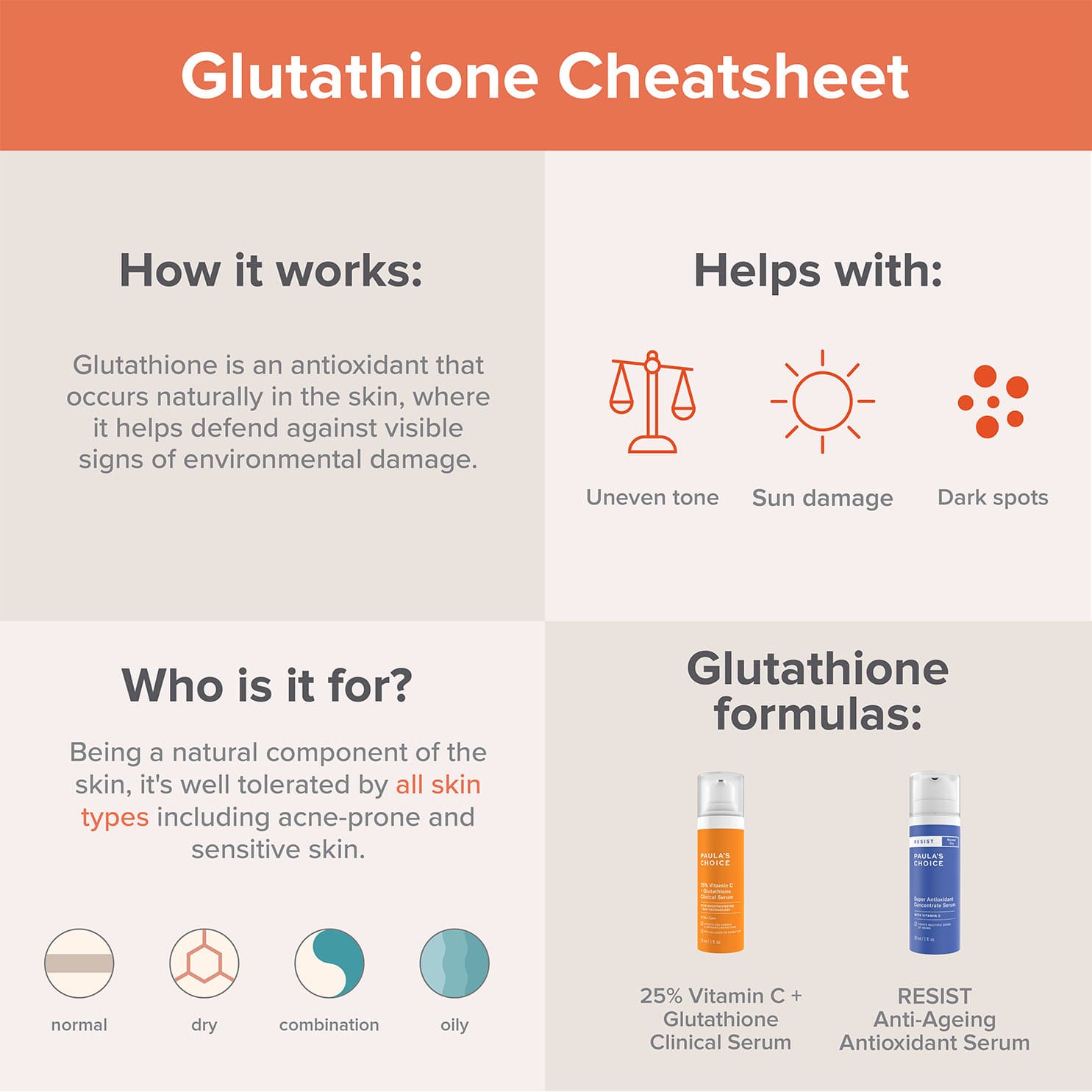
Glutathione for the skin
28.77
Amino acid metabolism in health and disease
29.58